

Coroutines Mastery was full of lessons and practical exercises, so a final project was just the cherry on top. I haven't expected anything ambitious, I made it clear that projects can be simple, they only need to use coroutines and serve the community. Yet I was surprised with so many heroes, who decided to make ambitious, amazing project. To honor them, here is a small list of my favorite ones.
Comet (from Coroutine Telemetry) is a library for tracking coroutines made by
Pandu Baraja. It provides a way to visually monitor coroutines execution, making it easier to debug and understand complex coroutine flows.
Pandu Baraja. It provides a way to visually monitor coroutines execution, making it easier to debug and understand complex coroutine flows.
// 1. Create Comet instance (once, at app startup)
val comet = Comet.create {
    exporter(CallbackCoroutineTelemetryExporter(
        onEvent = { event -> println("[Comet] $event") },
    ))
} /
comet.start()

// 2. Add comet.traced("name") to ANY launch - that's it
scope.launch(comet.traced("my-operation")) {
    // This and all children coroutines are automatically traced
    launch(CoroutineName("child-task")) { /* auto traced with name */ }
    async(CoroutineName("async-task")) { /* auto traced with name */ }
}
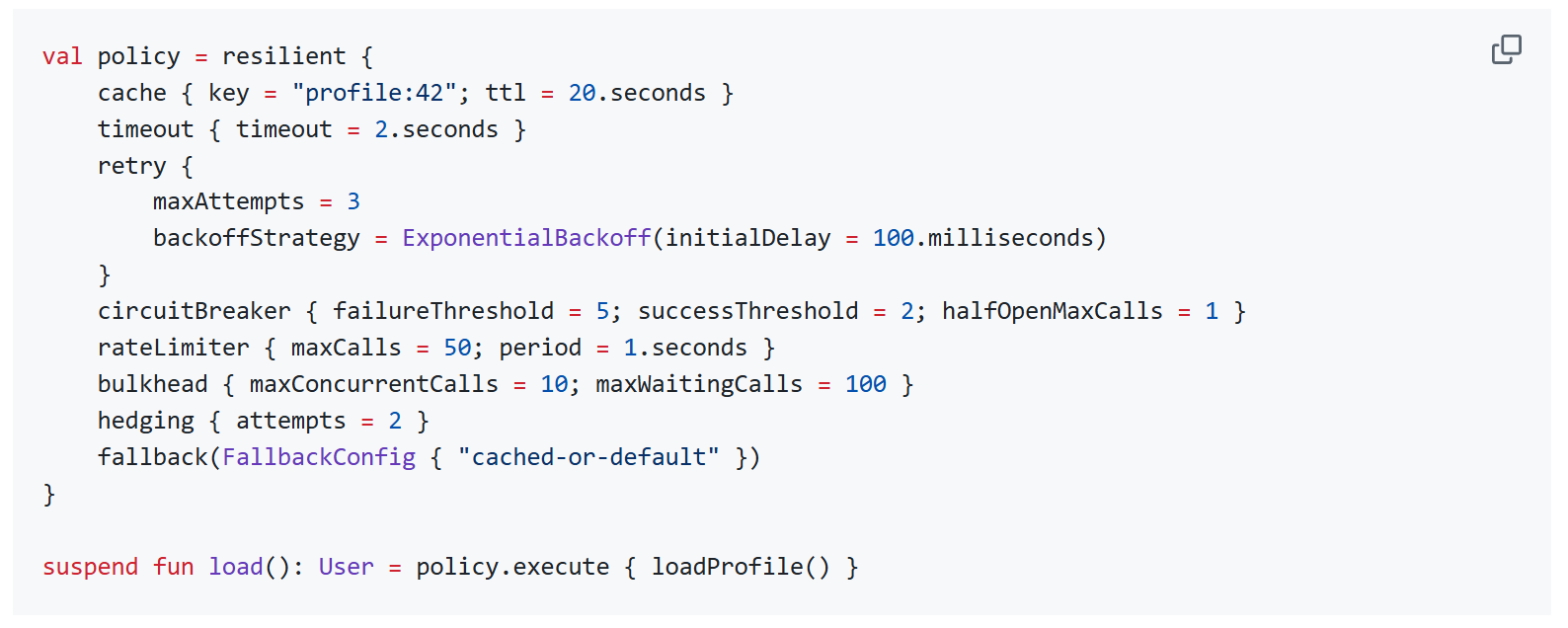
I am especially proud of this project. I am sure it already offered a lot of value to the author, and it is likely it will offer great value to our community. kmp-resilient by Santiago Mattiauda is a complete solution for setting up resilience patterns in Kotlin Multiplatform (KMM), coroutines-native and with solid tests. It also offers a really nice DSL-based idiomatic API.
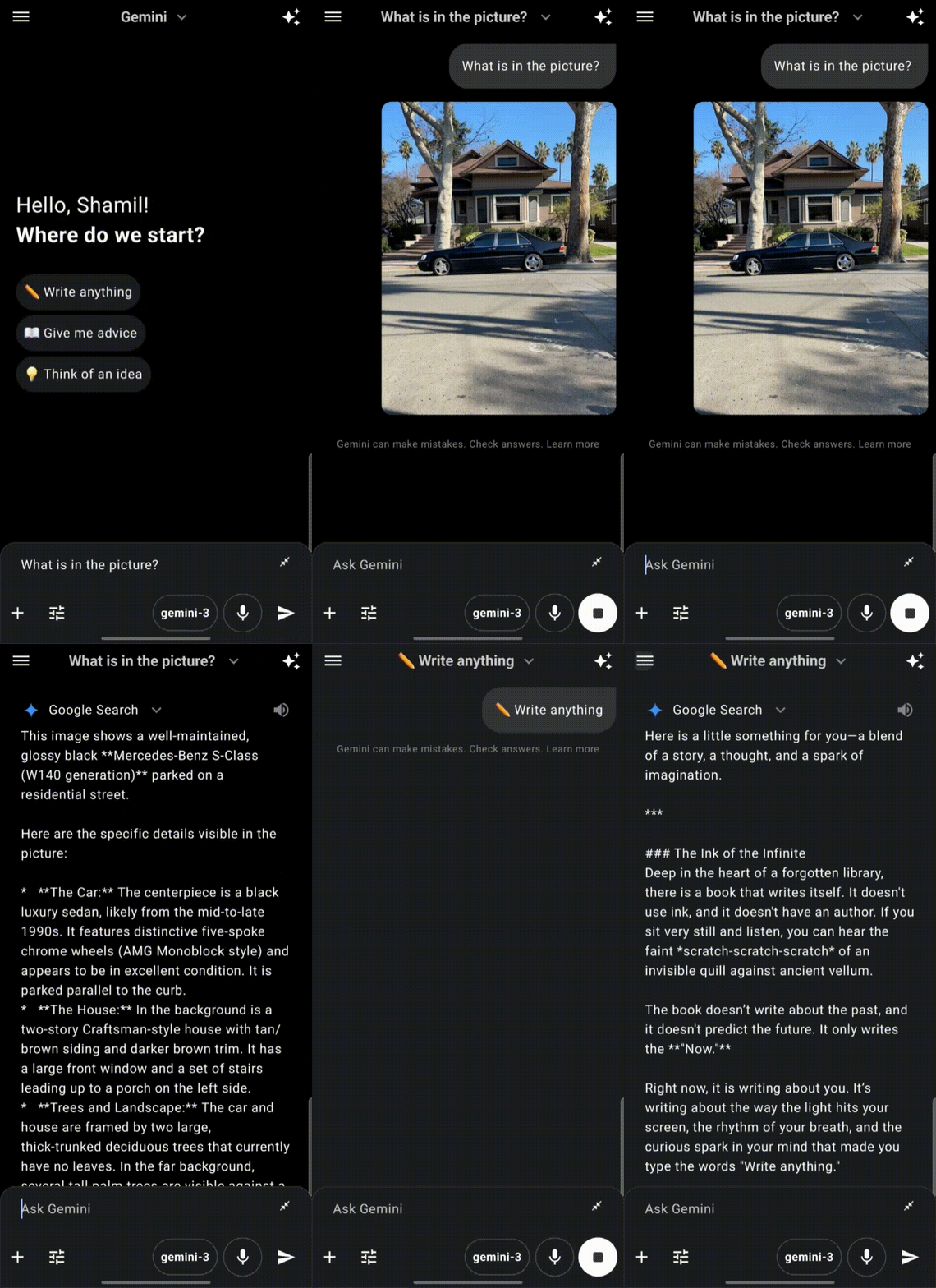
Gemini client by Shamil Giylmetov was a very ambitious project, with many edge-cases to cover. Code is solid and well-structured, making it a great example for learning coroutines in Android development.
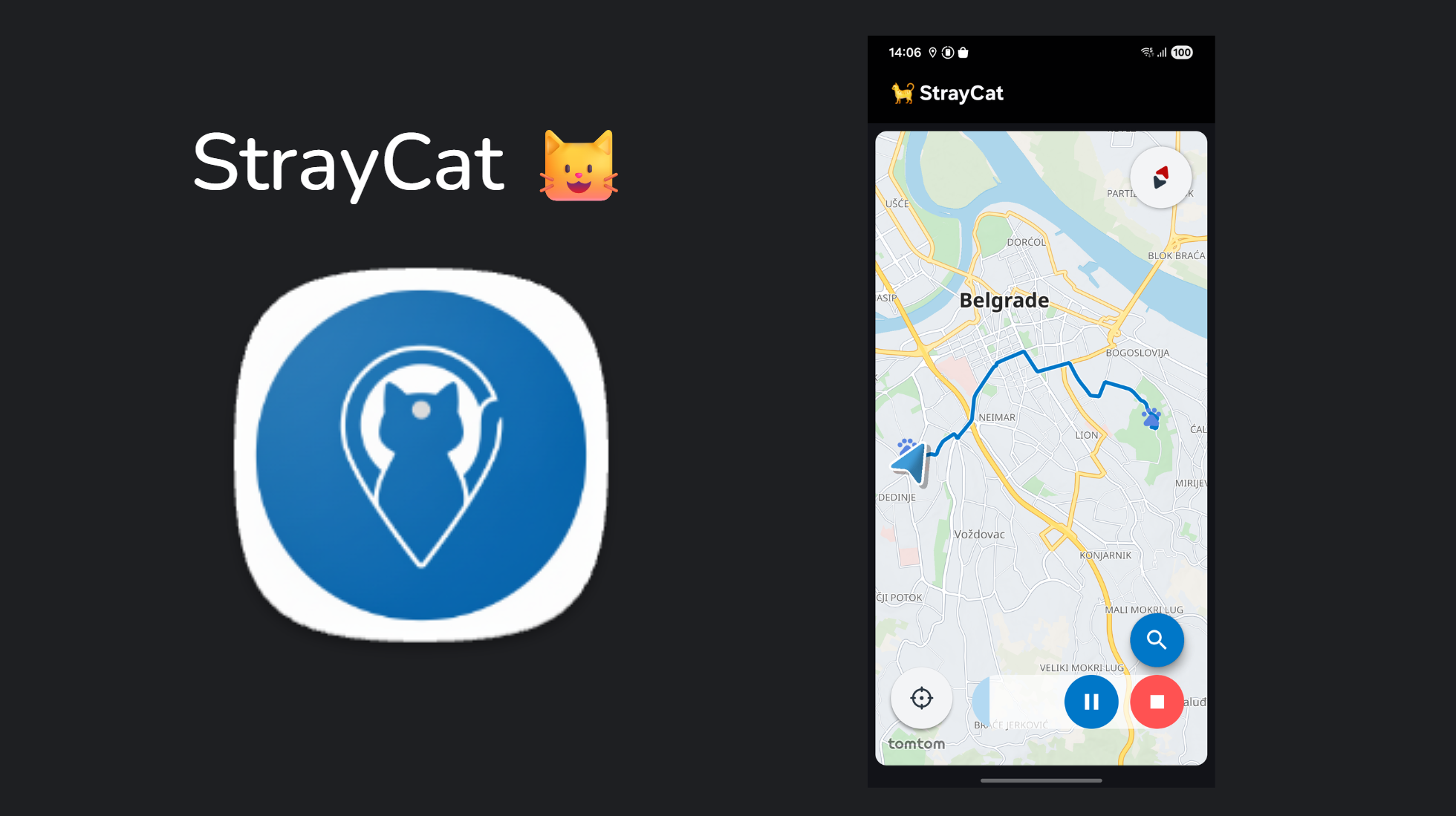
StrayCat is a beautiful Android application for location simulation and GPS tracking created by Marko Lainovic from TomTom. Perfect for testing location-based features and route simulations.
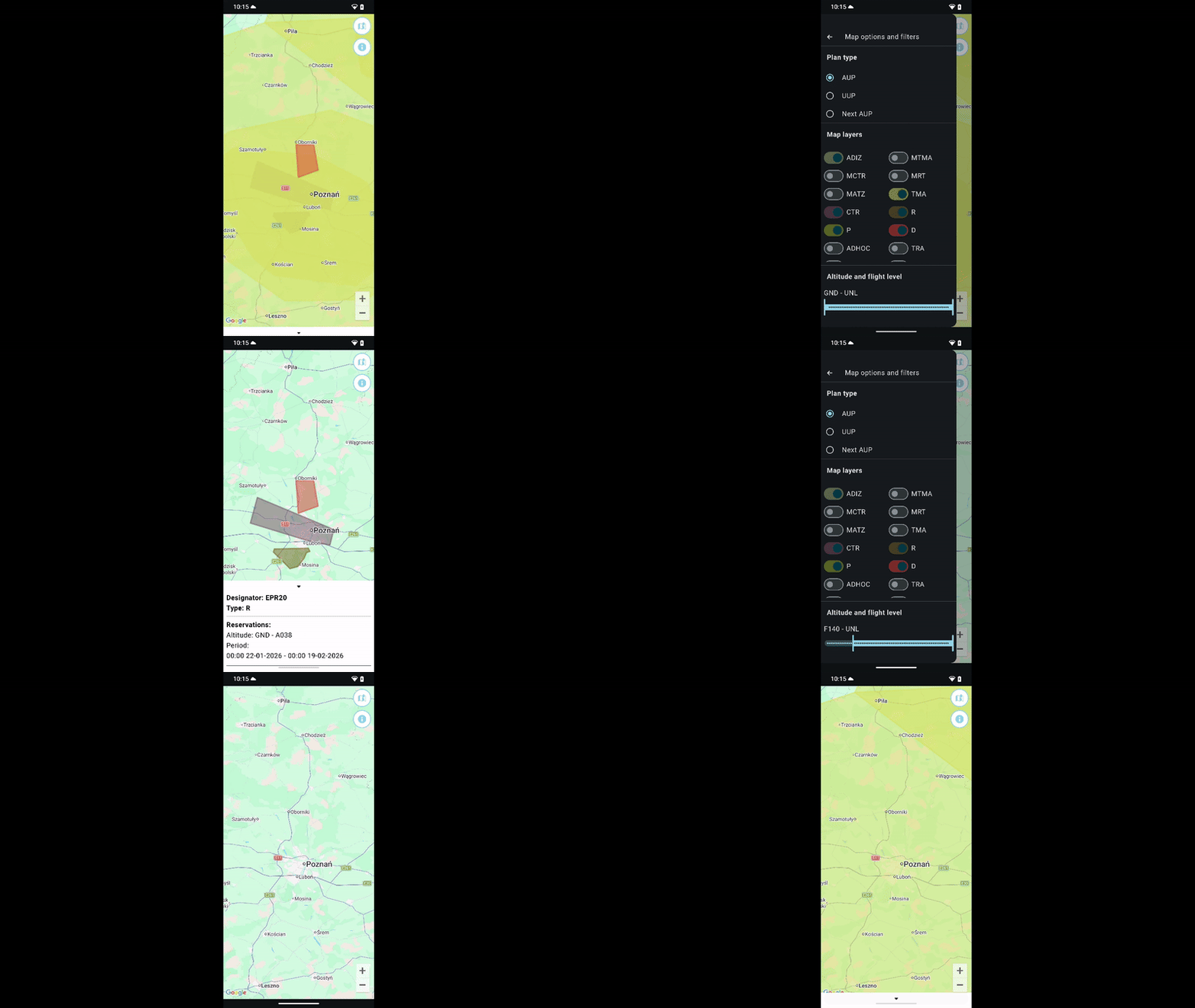
Time for an application for passionates of aviation. Where2fly (made by Krzysztof Cieślewicz) is an unofficial android version of https://airspace.pansa.pl web application. It allows downloading and viewing basic airspace and updated usage plans and related information for a Warsaw flight information region. It is well-written and looks good. It also presents how to deeply test view models and repositories using the power of kotlinx-coroutines-test.
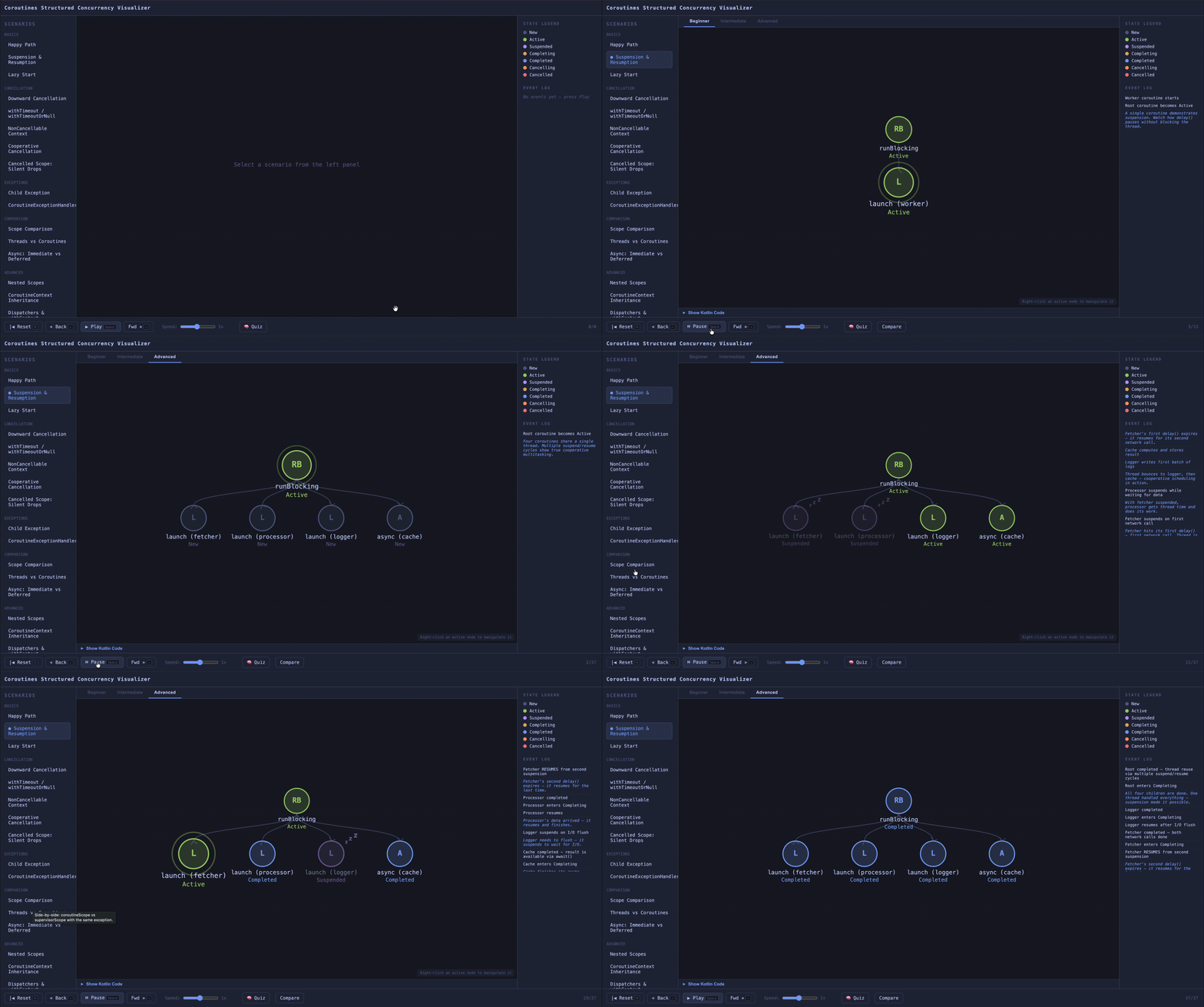
Here is an amazing visualizer of structured concurrency by Mihaela Gradinaru. It is to help learn how coroutines interact with each in different scenarios, such as cancellation, exceptions, etc. The project is mainly a web application, but it was made to teach Kotlin coroutines.
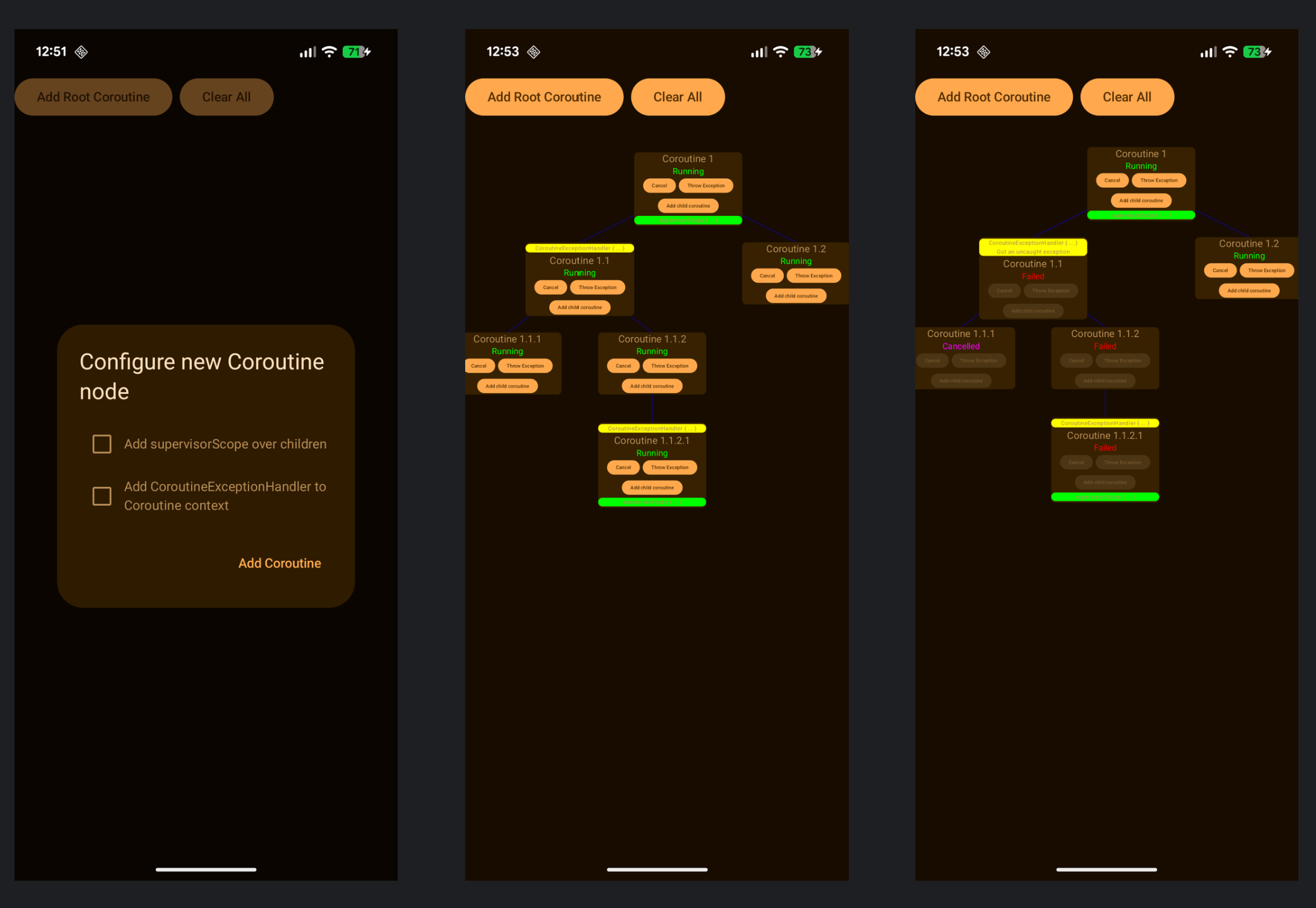
It isn't the hardest of all projects, but I was stunned by the simplicity and implementation of the idea. Krystian Mateja made an application that allows you to make any hierarchy of coroutines and observe how it will behave in response to cancellation, exceptions, and other events. The code is actually using coroutines and showing their state. Everything is simple and straightforward.
Talking about visualizing coroutines, I must mention VizCor, a great coroutines visualizer by Jiri Hermann. I believe it is the most ambitious project, showing how to implement backend services in Ktor, with Swagger, AsyncAPI, OpenAPI, Micrometer and much more.
Backend code 👉 https://github.com/hermanngeorge15/vizcor-be
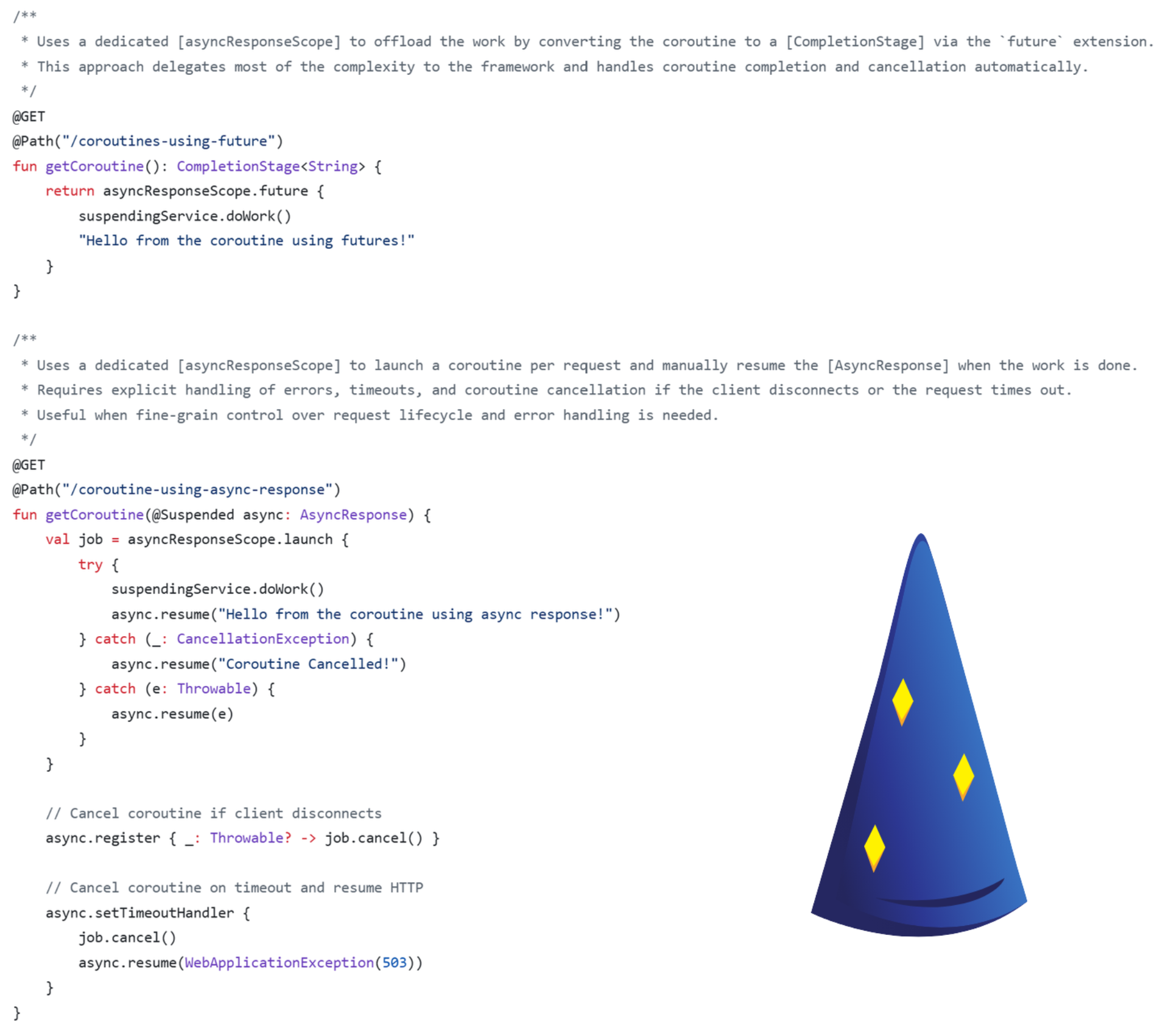
Dropwizard is a Java framework for developing ops-friendly, high-performance, RESTful web services. Apparently, there was no project showing how to use it together with Kotlin coroutines. This has changed thanks to Rui Pinto, who implemented a simple demo application that showcases how to use coroutines in Dropwizard.
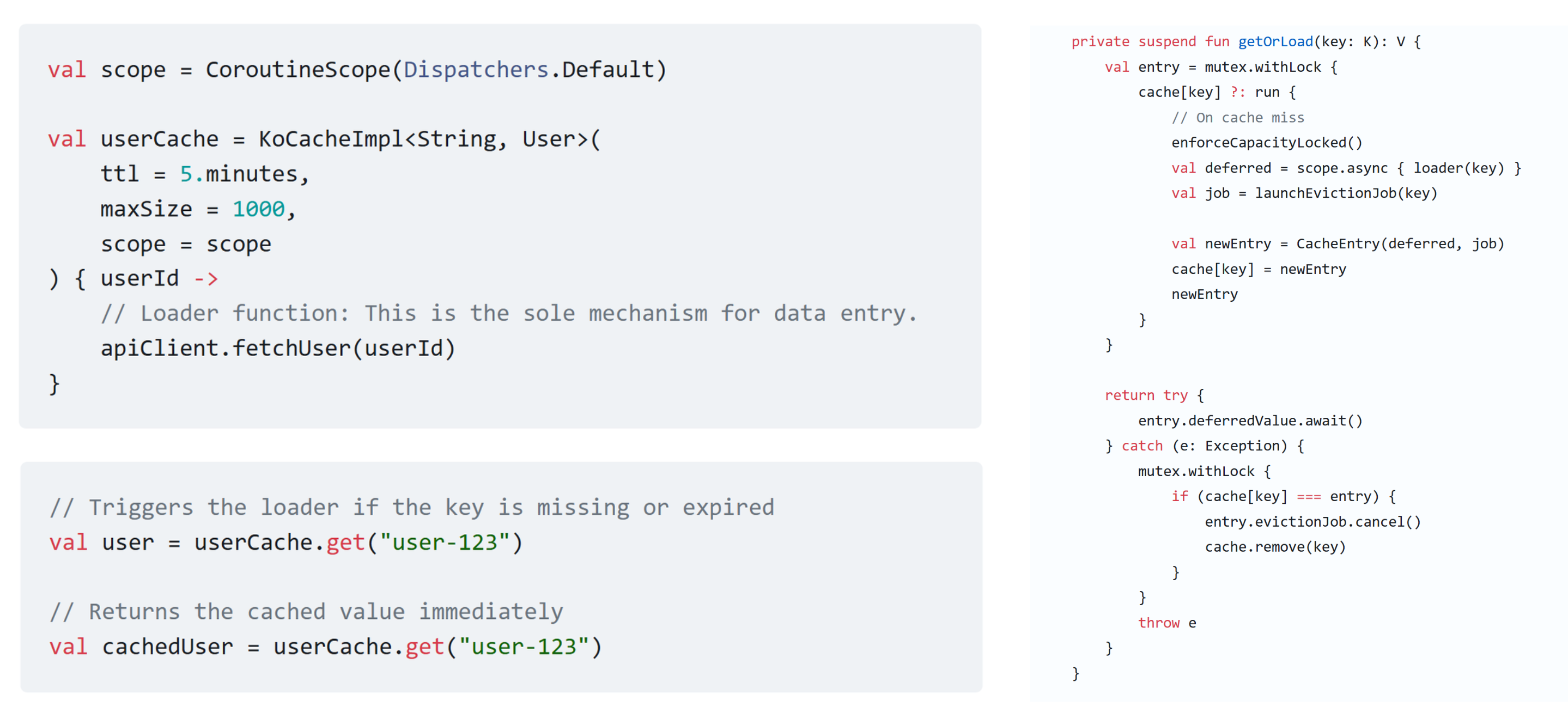
Cache is one of the greatest problems in programming. Of course, it is hard to make a cache that can compete with highly optimized solutions, but implementing a cache is a great exercise. A well-implemented cache needs to handle many edge cases, such as exception handling, cancellation, invalidation, capacity limits, etc. On this course I had three challengers, implementing their own cache.
KoCache by Anders Asplund (example use on the image above) 👉 https://codeberg.org/aasplund/KoCache
KCache by Matthias Reither 👉 https://github.com/reithma/kcache
suspending-cache by Mirko Ivanovic 👉 https://github.com/mirkoiv/kt-suspending-cache
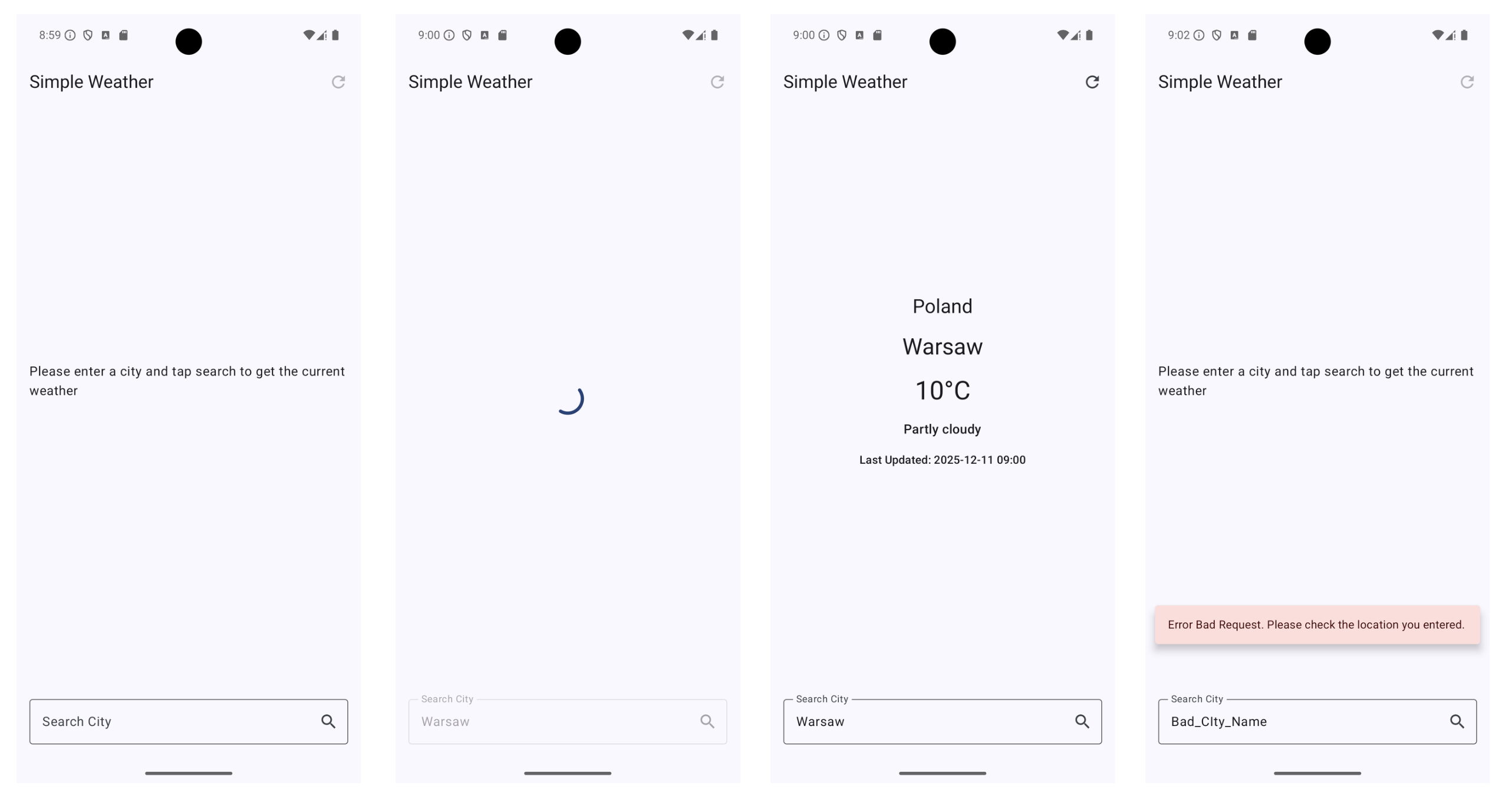
This one by Piotr Kanarek might not look that ambitious or big, but I like it as a nice showcase of how to correctly design an Android application. It implements search with multiple triggers, error handling, uiState pattern, simple yet correct architecture.
Do you lack the default error handler in
viewModelScope? This library by Luka Velimirovic might be what you look for! It offers configurable multiplatform vmScope, as a replacement for viewModelScope.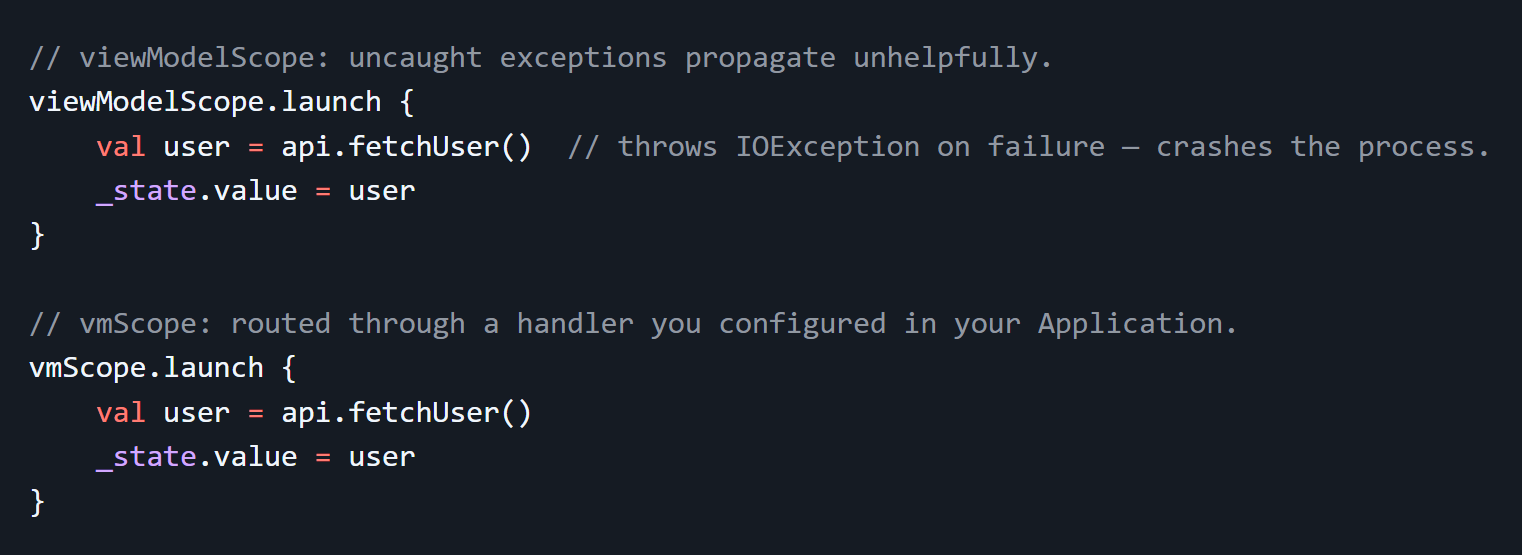
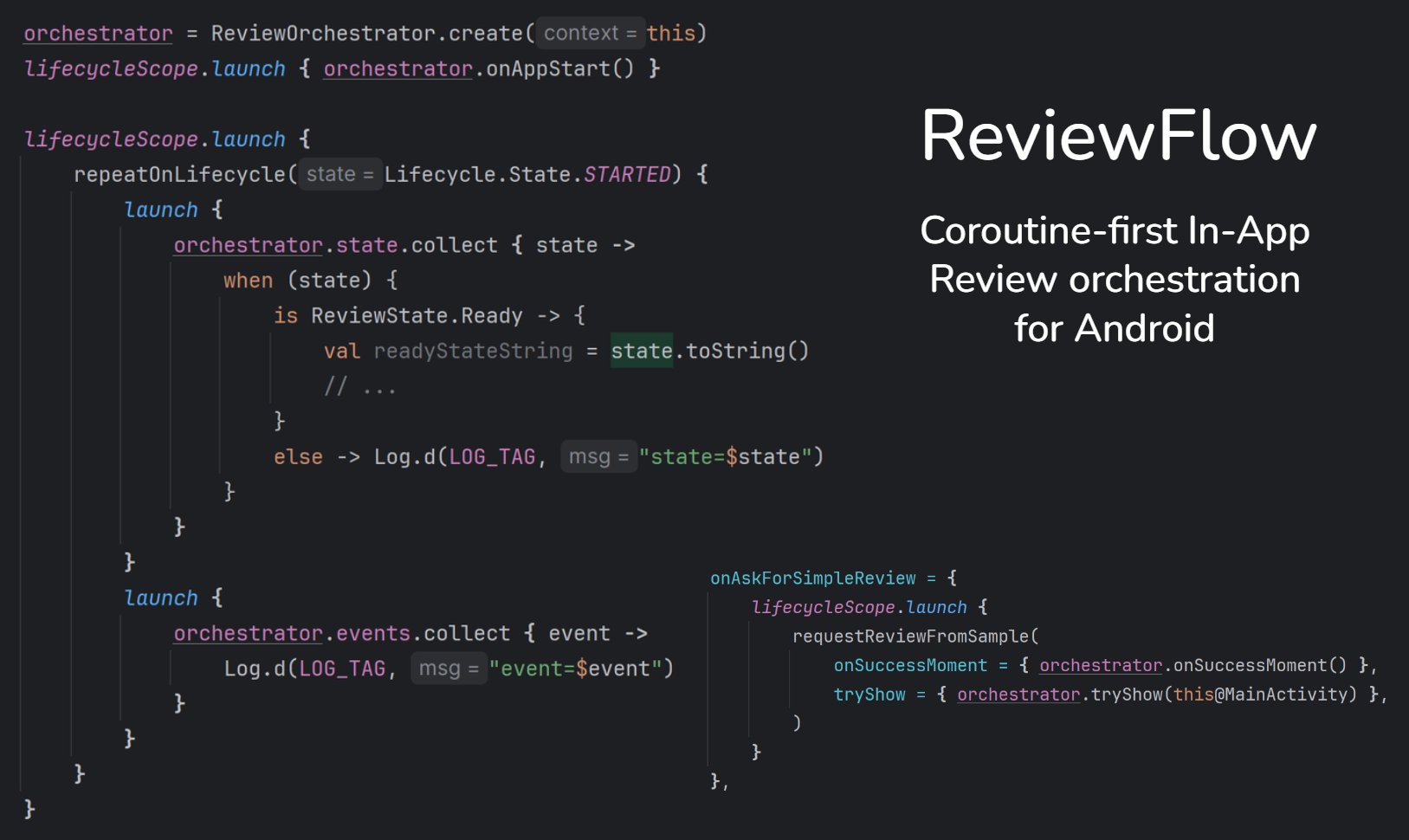
Dealing with Play Store In-App Review orchestration on Android can be hard, but here comes the ReviewFlow library that makes it easy and coroutine-friendly. This great project was made by Klemens Zleptnig.
- KMP Dispatchers Test by Magnum Rocha is an application showing what happens when you use different dispatchers for different kinds of tasks in Android. An amazing project, I hoped it will be turned into a game. It could be really fun and useful for learning dispatchers.
- ble-routines by Maksim Shchezhin is an amazing library for making BLE (Bluetooth Low Energy) usage quicker and simpler with Coroutines. The only reason it wasn't at the main list is that it is still WIP.
- StockMarket Application by Steve Mason is an example application observing stock market data with Coroutines.
This list is far from being complete, there were many other great projects, but I couldn't present them all. Great kudos to all the heroes who decided to make ambitious projects for their own learning and for sharing them with the community.
