

This is a text-version of the video we published on YouTube.
It is 2026, and while frontend development finally feels stable with three or four frameworks that dominate the landscape, an unexpected threat comes from Android. Compose is a framework that has become a modern standard for Android development and is increasingly seen on iOS, desktop, and even websites. It is written in Kotlin, a language that can be compiled to JVM, JavaScript, Wasm, or any native platform. It is a declarative UI library, just like React or Vue. Programs are constructed from components that are defined as functions. You can define a state, and as the state changes, the UI magically updates.
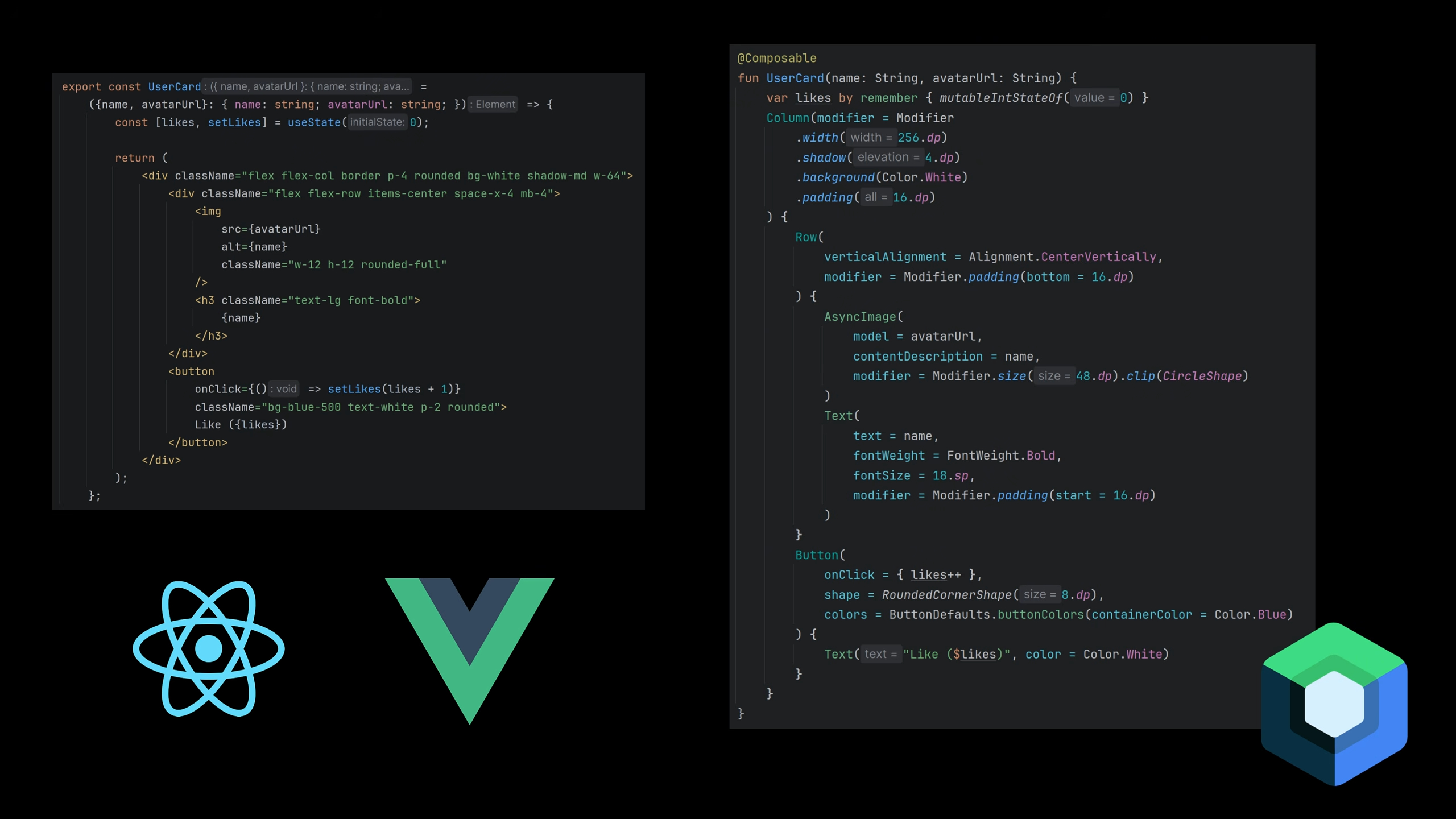
The key difference is that Compose built its own library of tools and components, rather than operating on the DOM and CSS, which, even with React and Tailwind, haunt frontend developers in their dreams. For Compose, supporting all kinds of screen sizes and adaptive layouts has always been a high priority.
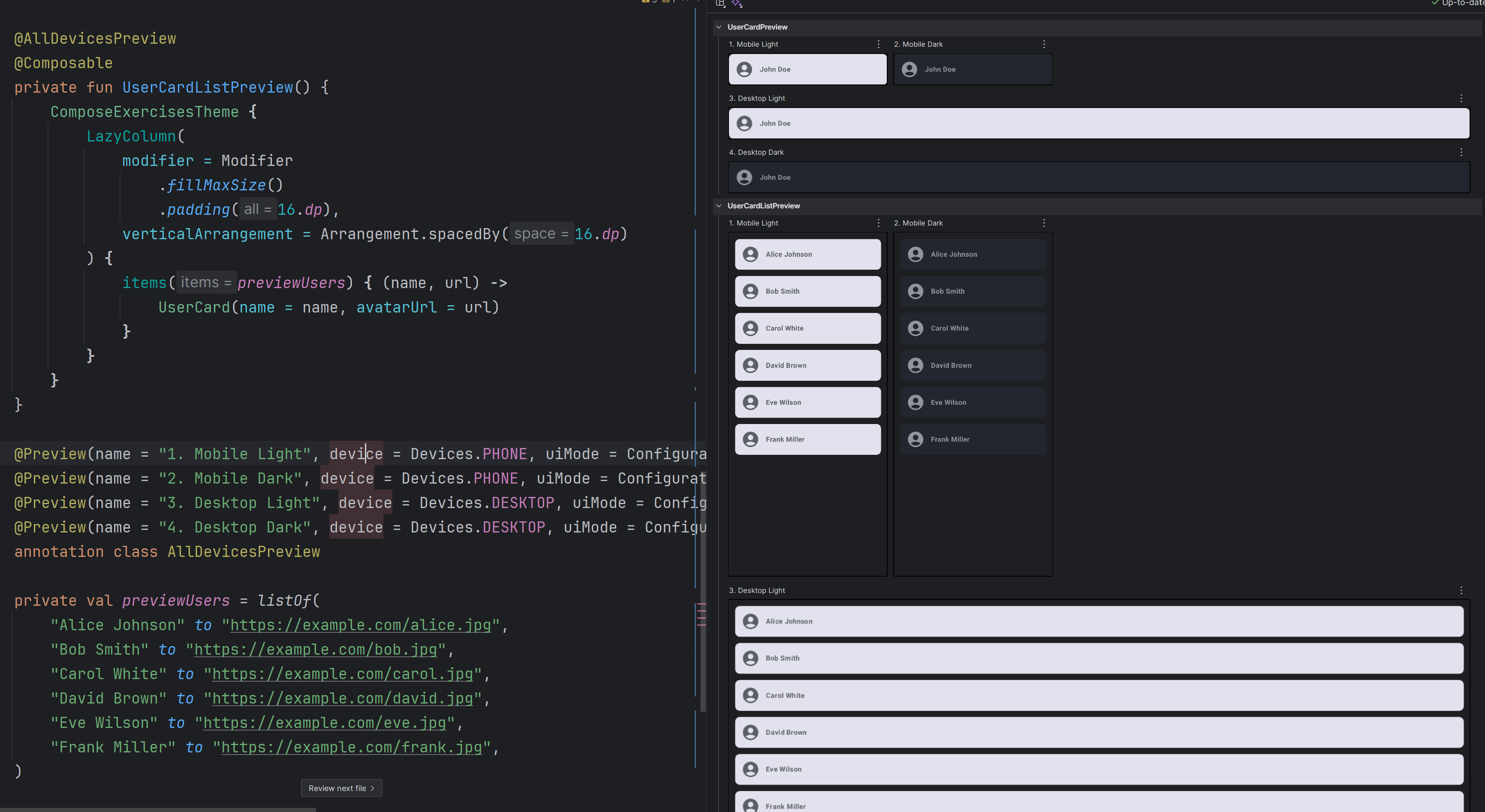
Of course, switching from classic web tools has its downsides, such as limited browser debugging or inspection support. Compose never needed those; instead, it introduced powerful preview tools that allow tracking or screenshot testing across many different configurations. Compose also provides a native API for providing delightful animations and transitions.
Compose was made by Google in cooperation with JetBrains. It already has its solid user base, as it is considered a modern standard for Android development. More and more startups are choosing Compose to write native applications for all platforms. One of the benefits is having the same language, Kotlin, used for backend and all clients. Bigger companies use Compose primarily on Android, but more and more often decide to distribute specific views in a way that can be used on other platforms, like iOS. Frontend isn’t a native domain for Compose, but it has its advantages there. Applications written for Android and iOS can be just distributed as websites, and Compose on Wasm can offer significantly better performance than traditional websites.
Will Compose ever reach the scale of frontend frameworks? Who knows. For now, I have spent years with both React and Compose, and I am much happier as a developer since I moved to Compose.
